
Seven cases where you should buy from someone else: functional safety, guaranteed determinism, IEC 61131-3 specs,...
Latest posts
-
 When NOT to use a GEVINORead more
 -
 Da Ladder e testo strutturato a GEVINO con l'aiuto dell'IA: costi ricorrenti a confronto, cosa si converte davvero, cosa non si converte, e la sequenza di migrazione a rischio più basso.Read more
The logic of a small machine fits on one printed page and has not changed in ten years. The bill of materials changes...
-
 Alarm Handling and I/O Monitoring: PLC Safety Logic Without Writing a Line of CodeRead more
"Artificial intelligence only writes toy examples": it is the most common objection, and it is fair. So we gave it...
-
 Industrial Retrofitting and Modbus RS485: Get Old Machines Onto the Network Without Losing Your MindRead more
There is a press from 1998 in the corner of the shop floor: it works perfectly and has no idea what Industry 4.0 is....
-
 From Idea to PLC Code in 2 Minutes: AI Writes a Conveyor Belt's Control LogicRead more
A photocell, a belt, a red lamp. Until recently, turning that description into a working program took a skilled...
-
 Arduino Is Not Industrial? Let's Clear Up the MisconceptionsRead more
Many engineers believe Arduino is suitable only for hobby projects. In reality, industrial reliability depends on...
-
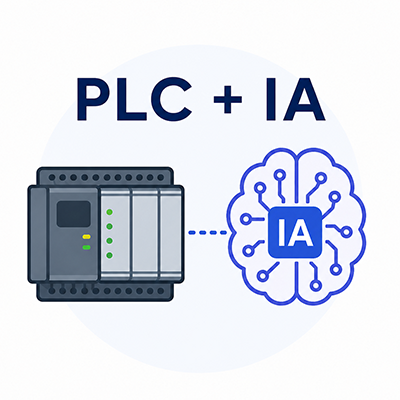 How to Program a PLC with Artificial Intelligence in 2026Read more
Discover how Artificial Intelligence is transforming PLC programming. Learn how ChatGPT, Claude Code, and...
-
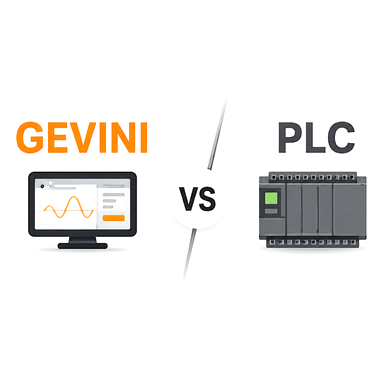 Why Choose GEVINO Instead of a Traditional PLC?Read more
GEVINO challenges traditional PLCs with lower costs, no software licenses, AI-assisted programming, and maximum...
Blog categories
Search in blog
Archived posts
How to Program a PLC with Artificial Intelligence in 2026
For decades, PLC programming was a task reserved for highly specialized automation engineers. Today, Artificial Intelligence is changing the way industrial software and automation systems are developed.
Tools such as ChatGPT, Claude Code, and GitHub Copilot can generate code, suggest solutions, and dramatically reduce development time.
But can a PLC really be programmed using AI?
The answer is yes—provided that the platform is open and flexible enough to take advantage of modern development tools.
The Limitations of Traditional PLCs
Many industrial PLCs rely on proprietary software environments and specialized programming languages.
While this approach offers reliability and standardization, it also comes with several drawbacks:
-
Expensive software licenses
-
Steep learning curves
-
Vendor lock-in
-
Limited integration with modern AI development tools
In most cases, AI assistants cannot directly understand proprietary PLC projects or work effectively within closed development environments.
Why Arduino and AI Work So Well Together
The Arduino ecosystem is one of the most documented development platforms in the world.
Millions of examples, libraries, tutorials, and public projects provide AI models with a vast knowledge base, allowing them to generate code that is often immediately usable.
This makes Arduino-compatible industrial controllers, such as GEVINO PLCs, particularly suitable for AI-assisted development.
For example, you can ask an AI assistant:
-
Read data from a Modbus sensor every minute
-
Send a GSM alarm when a digital input changes state
-
Display temperature and humidity on a TFT screen
-
Control a motor using an encoder
-
Log machine data to an SD card
The AI can generate a first working version of the software within seconds.
Claude Code: A New Way to Develop Industrial Software
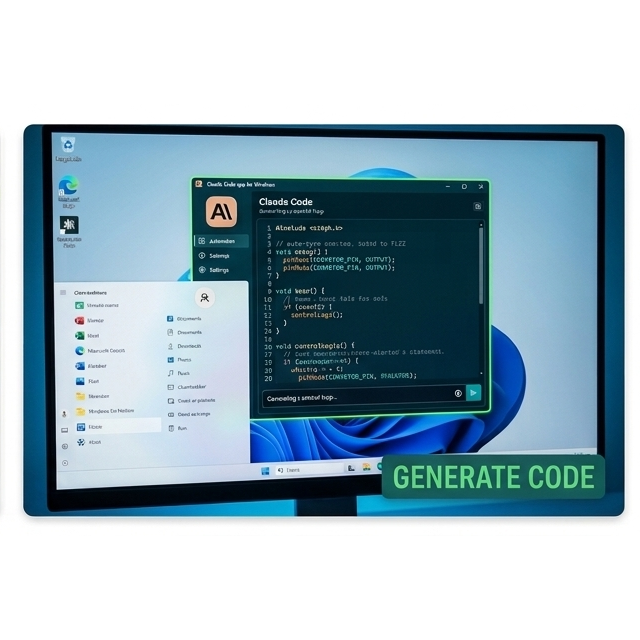
Claude Code is one of the most interesting tools currently available for embedded and industrial development.
Unlike traditional code assistants that generate only small snippets, Claude Code can analyze entire projects, modify existing files, create new modules, and assist with software maintenance.
In a GEVINO project, Claude Code can:
-
Create new application features
-
Fix bugs and errors
-
Add support for industrial protocols
-
Generate technical documentation
-
Refactor and optimize existing code
This can significantly reduce development time and increase productivity.
Can You Build Automation Systems Without Being a Programmer?
Artificial Intelligence does not eliminate the need for technical knowledge.
However, it allows engineers, technicians, and system integrators to develop automation solutions much faster than before.
In many cases, understanding the machine or process becomes more important than memorizing programming syntax.
The ability to clearly describe the desired behavior is often enough for AI tools to generate a solid starting point.
A Practical Example
Imagine you need to control a water pump.
Instead of writing the entire program manually, you can simply describe the required behavior:
"Turn on the pump when the tank level drops below 20%. Turn it off when the level exceeds 80%. Send an SMS alarm if the sensor stops responding."
An AI assistant can generate the control logic, recommend the required libraries, and provide a functional code framework in seconds.
GEVINO and Artificial Intelligence
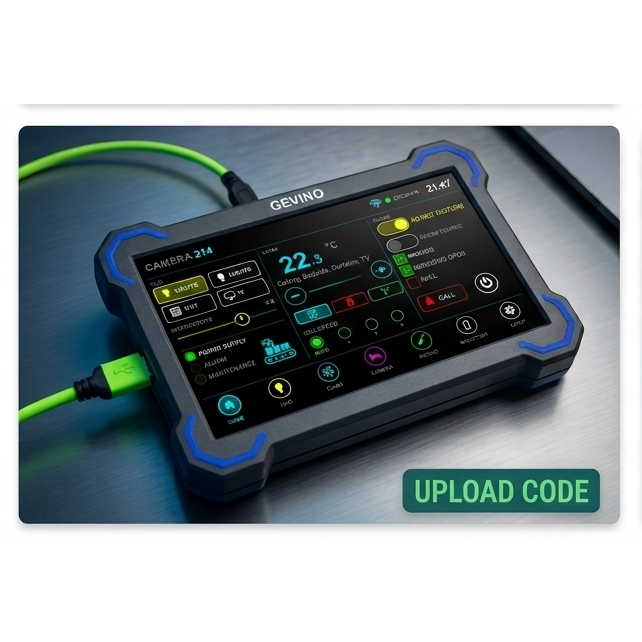
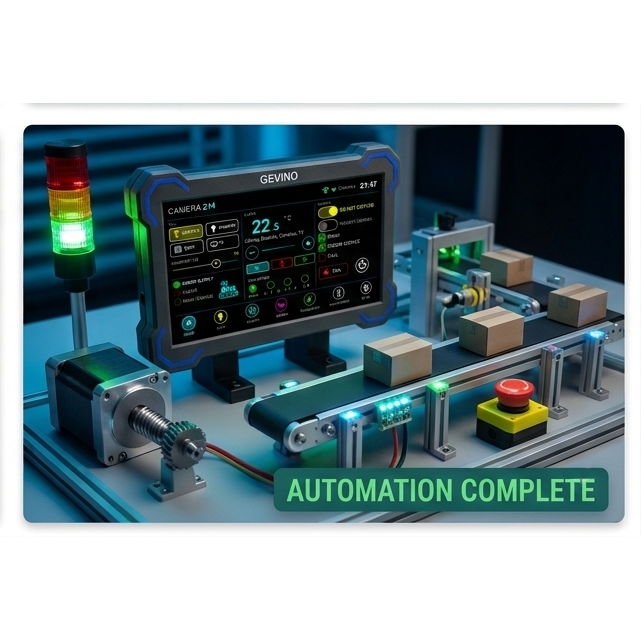
GEVINO PLCs are designed to take advantage of the Arduino ecosystem and modern AI development tools.
They support:
-
Arduino IDE
-
Visual Studio Code
-
Claude Code
-
GitHub Copilot
-
ChatGPT
Powered by the ARM Cortex-M0+ SAMD21 processor and compatible with Arduino Zero, GEVINO controllers provide a powerful and flexible platform for industrial automation, IoT applications, machine control, and custom embedded systems.
Conclusion
Artificial Intelligence is not replacing automation engineers. Instead, it is becoming one of the most powerful tools available for accelerating software development.
Open platforms such as GEVINO enable developers and industrial companies to fully benefit from AI-assisted programming, reducing development costs, shortening project timelines, and making industrial automation more accessible.
The future of PLC programming is not about writing every line of code manually—it is about collaborating with Artificial Intelligence to transform ideas into working automation systems faster than ever before.
Posted in:
GEVINI
Related posts
-
Why Choose GEVINO Instead of a Traditional PLC?
GEVINO challenges traditional PLCs with lower costs, no software licenses, AI-assisted programming, and maximum...Read more
-
Arduino Is Not Industrial? Let's Clear Up the Misconceptions
Many engineers believe Arduino is suitable only for hobby projects. In reality, industrial reliability depends on...Read more
-
From Idea to PLC Code in 2 Minutes: AI Writes a Conveyor Belt's Control Logic
A photocell, a belt, a red lamp. Until recently, turning that description into a working program took a skilled...Read more
-
Industrial Retrofitting and Modbus RS485: Get Old Machines Onto the Network Without Losing Your Mind
There is a press from 1998 in the corner of the shop floor: it works perfectly and has no idea what Industry 4.0 is....Read more
-
Alarm Handling and I/O Monitoring: PLC Safety Logic Without Writing a Line of Code
"Artificial intelligence only writes toy examples": it is the most common objection, and it is fair. So we gave it...Read more
Leave a comment